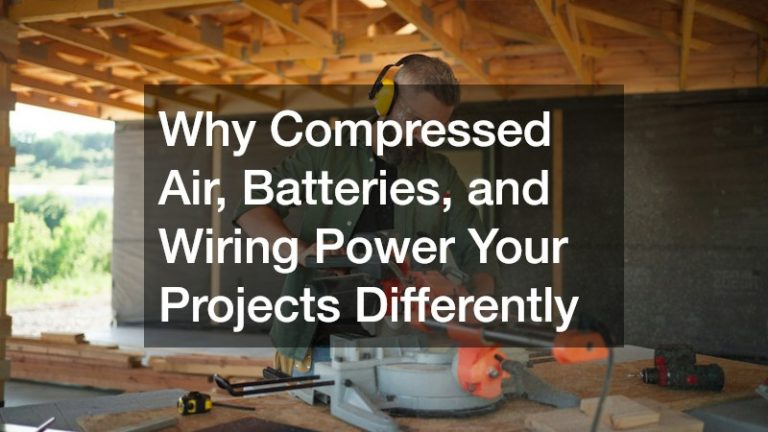
Every DIY project or home upgrade runs on some form of power, whether it is the electricity in your walls, the compressed air in a tank, or the battery pack tucked inside a cordless tool. Choosing the wrong power source can mean a stalled project, a tool that underperforms, or a system that fails when you need it most. Understanding how these three power delivery methods actually work helps you match the right energy source to the right job. This guide breaks down the practical differences so you can plan your next project with confidence instead of guesswork.
How Compressed Air Delivers Power to Tools
Compressed air systems store energy in a tank and release it through a hose to power pneumatic tools, and this method has been a workshop staple for decades because it delivers consistent torque without overheating. Unlike electric motors, air-powered tools tend to be lighter since they do not need a heavy motor or battery pack built into the housing. This makes them popular for repetitive, high-demand tasks where a corded or cordless tool might wear out faster.
One category worth understanding is air feed drills, which use continuous airflow to keep the drill bit cool and running smoothly through metal, wood, or masonry without stalling under pressure. These tools are common in workshops and job sites where drilling is constant rather than occasional, since the compressor can keep supplying power indefinitely as long as it stays fueled with electricity. The tradeoff is that you need an air compressor and hose setup, which adds bulk and limits mobility compared to a battery-powered alternative.
- Compressed air tools generally run cooler during extended use
- A compressor and hose are required, reducing portability
- Air tools are often lighter than their electric counterparts
- Maintenance includes monitoring moisture buildup in the air line
- Best suited for stationary or semi-permanent workshop setups
How Battery Power Handles Portable Projects
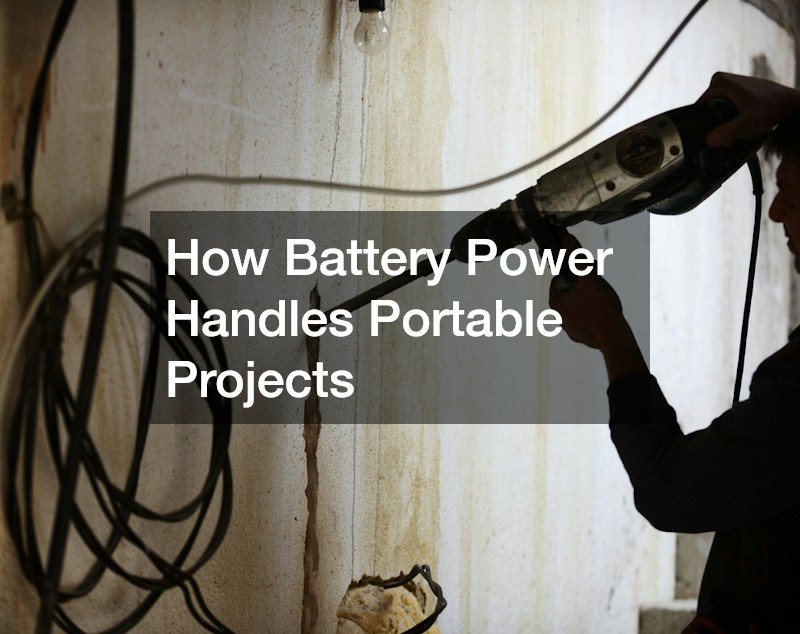
Battery-powered tools have become the default choice for many home projects because they offer freedom of movement without a cord or hose tethering you to a wall outlet or compressor. Lithium-ion batteries in particular have improved dramatically, offering longer run times and faster recharging than older nickel-based packs. This makes them a practical option for tasks that move around a property, like assembling furniture in different rooms or working outdoors far from an outlet.
The main limitation of battery power is capacity. Every battery eventually runs out of charge, and heavy-duty tasks like continuous drilling into concrete can drain a pack faster than lighter jobs. Buying a second battery or investing in a fast charger can offset this, but it is worth factoring into your budget and planning if your project spans several hours.
- Cordless tools offer mobility that corded or air-powered tools cannot match
- Battery life varies significantly based on tool demand and battery quality
- Charging time should factor into project scheduling for larger jobs
- Battery packs add weight to handheld tools compared to air-powered versions
How Home Wiring Supports Fixed Installations
Hardwired electrical systems are the backbone of most permanent home features because they provide constant, reliable power without needing to be recharged or refueled. This makes wiring the logical choice for anything that runs continuously or operates on a schedule, since it draws directly from the home’s electrical panel. Unlike batteries or compressed air, a hardwired connection does not degrade in capacity over time, though the wiring itself can wear out and need inspection every decade or so.
A great example of a project that depends on solid wiring is motorized shades installation, where the automated system needs a dependable power source to open and close on a timer or remote signal without interruption. Because these systems are often built into walls or window frames, planning the wiring path before installation day saves time and prevents costly rework. Homeowners who skip this step sometimes discover after the fact that an outlet is too far away or that additional circuits are needed to support multiple motorized units.
- Hardwired systems provide continuous power without recharging
- Wiring should be inspected periodically for fraying or corrosion
- Planning wire routes in advance prevents costly installation delays
- Fixed wiring works best for features that operate on a regular schedule
How Solar Energy Supplements Traditional Power Sources
Solar power has become an increasingly popular way to supplement or replace grid electricity, especially for outdoor projects or areas where running a new wire is impractical. Installing solar panels on a shed roof, detached garage, or backyard structure can provide enough energy to run lighting, small tools, or charging stations without tapping into the main household circuit. This is especially useful for property owners who want to reduce dependence on the grid or add power to a location that previously had none.
The tradeoff with solar is variability. Cloudy days, shorter winter daylight hours, and panel placement all affect how much energy is actually captured and stored in a battery bank for later use. For consistent results, most solar setups pair with a battery storage system so that power collected during the day can be used at night or during low-sun periods. Homeowners considering this option should have their roof or mounting area assessed for sun exposure before committing to a system size.
- Solar output depends heavily on location, angle, and seasonal daylight
- Battery storage is typically needed to use solar power after sunset
- Ideal for detached structures where new wiring is difficult to run
- Reduces reliance on grid electricity for select applications
Comparing Costs and Long Term Maintenance Across Power Sources
Cost comparisons between compressed air, battery, and wired systems depend heavily on how a tool or feature will actually be used. Compressed air setups require an upfront investment in a compressor but tend to have lower per-tool costs since air tools lack expensive battery packs. Battery-powered tools often cost more initially because of the battery and charger, and replacement batteries add ongoing expense over the years.
Wired systems typically have the lowest long-term operating cost since they draw directly from the grid, but installation costs can be higher if new circuits or outlets are needed. Maintenance also differs across all three: compressors need regular oil changes and moisture drainage, batteries degrade and eventually need replacing, and wiring should be checked periodically by a licensed electrician for safety. Weighing these costs against how often you will use the tool or system helps determine which power source offers the best value over time.
- Compressors have higher upfront cost but lower per-tool expense
- Batteries require periodic replacement as capacity fades with age
- Wired systems often have the lowest ongoing operating cost
- Professional inspection is recommended for aging wiring or circuits
Compressed air, batteries, and home wiring each solve a different power problem, and understanding their strengths helps you avoid mismatched tools or underpowered installations. Think about how often you will use a tool, how portable it needs to be, and whether the project is temporary or permanent before deciding which power source fits best. Taking the time to plan now will save you money, frustration, and rework down the road. Use this comparison as a starting point, then match your specific project needs to the power source that supports it most reliably.